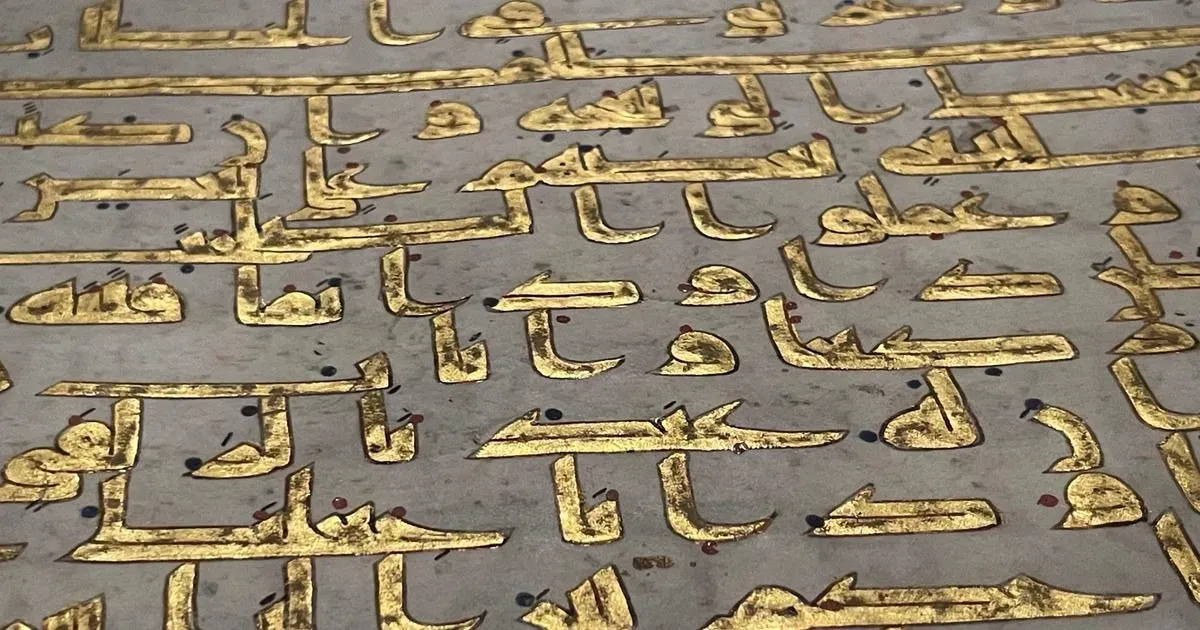
HADITH
What Is a Hadith? Sahih, Hasan and Daif Explained Simply
A hadith is a report of what the Prophet Muhammad ﷺ said, did or approved. Learn what isnad and matn mean and how sahih, hasan and daif grades work.
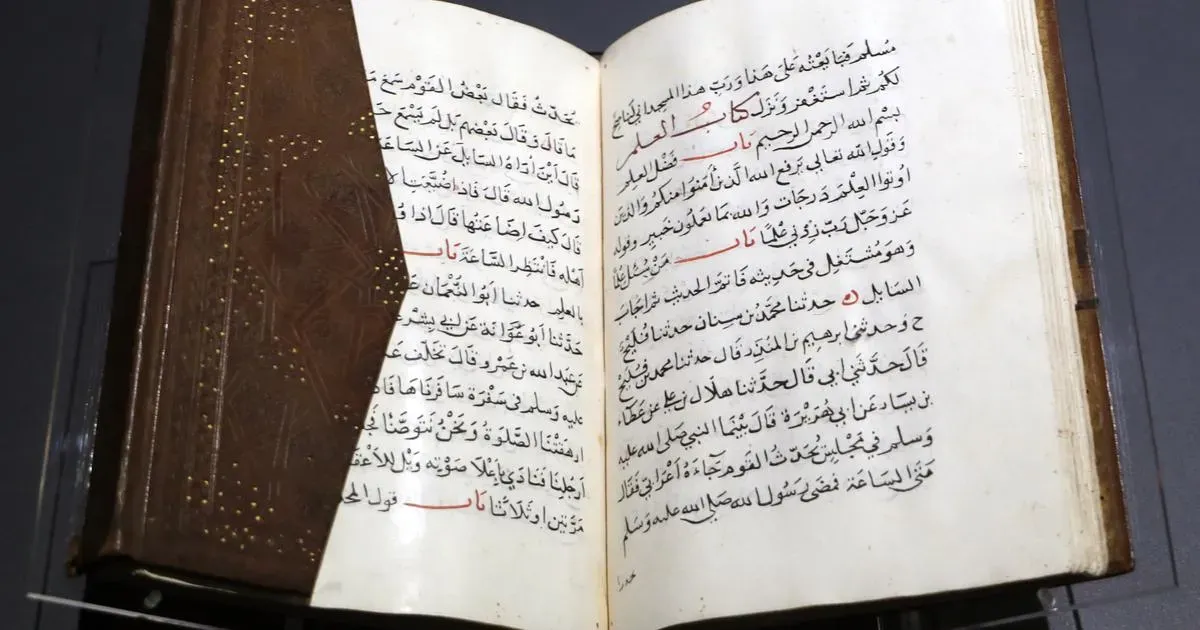
A hadith is a report of what the Prophet Muhammad ﷺ said, did, or silently approved, passed down through a named chain of people. Muslims treat authentic hadith as the second source of guidance after the Quran. Because the reports travelled by word of mouth and in writing over generations, scholars built a careful system to sort the reliable ones from the weak and the invented.
If you have ever seen "sahih", "hasan" or "daif" next to a hadith and wondered what those labels mean, this guide explains them in plain language as they are used in Sunni hadith scholarship, with real examples you can check yourself on Sunnah.com. When you are done, you can test what you learned with a short hadith quiz.
Key Takeaways
- A hadith has two parts: the isnad (the chain of narrators) and the matn (the actual text).
- Sahih (sound) means the chain is connected, every narrator is trustworthy and precise, and there is no hidden defect or odd contradiction.
- Hasan (good) meets the same standard except that the precision of at least one narrator is a little lower. Scholars still act on it.
- Daif (weak) has a gap in the chain or a narrator with a known problem, so it cannot be relied on as a statement of the Prophet ﷺ.
- Grades can differ between scholars, so always look at who graded a hadith and check it with a qualified teacher.
What Does the Word "Hadith" Mean?
The Arabic word hadith means "speech", "report" or "something new". In Islamic usage it refers to a report about the Prophet ﷺ. A report can describe:
- Something he said, such as "Actions are judged by intentions" (Sahih al-Bukhari 1).
- Something he did, such as how he prayed or performed wudu.
- Something he approved, when a companion did something in front of him and he did not object.
- A description of him, such as his appearance or character.
Hadith and Sunnah are closely linked but not identical. The Sunnah is the Prophet's way of life as a whole. Hadith are the individual reports through which Muslims learn about that way of life. The Quran points believers to the Prophet's example: "Whatever the Messenger gives you, take it; and whatever he forbids you, refrain from it" (Surah Al-Hashr 59:7).
The Two Parts of Every Hadith: Isnad and Matn
Every hadith has an isnad and a matn, and scholars examine both. The isnad is the list of people who passed the report along, from the collector back to the Prophet ﷺ. The matn is the text being reported.
Here is how the first hadith in Sahih al-Bukhari is structured in simplified form:
| Part | What it contains | Example from Sahih al-Bukhari 1 |
|---|---|---|
| Isnad (chain) | Each narrator who heard and passed it on | al-Humaydi, from Sufyan, from Yahya ibn Sa'id, from Muhammad ibn Ibrahim, from 'Alqamah, from 'Umar ibn al-Khattab |
| Matn (text) | The words attributed to the Prophet ﷺ | "The reward of deeds depends upon the intentions..." |
Why do chains matter so much? The early scholar 'Abdullah ibn al-Mubarak (d. 181 AH), one of the great early hadith masters, put it this way: the isnad is part of the religion, and without it anyone could say whatever they liked. Imam Muslim quotes this saying in the introduction to his Sahih (Islamic Awareness, "An Introduction to the Science of Hadith").
The concern was not abstract. The Prophet ﷺ warned: "Whoever tells a lie against me intentionally, then let him occupy his seat in Hell-fire" (Sahih al-Bukhari 110). That warning is why early Muslims took the job of checking reports so seriously.
How Are Hadith Graded?
Scholars grade a hadith by testing its chain and text against a set of conditions. The three-part division into sahih, hasan and daif was popularised by Imam al-Tirmidhi (d. 279 AH), who graded hadith throughout his Jami', and its definitions were standardised by Ibn al-Salah (d. 643 AH), whose Muqaddimah became the standard handbook for later scholars.
The Muqaddimah is available in English as An Introduction to the Science of the Hadith, translated by Eerik Dickinson (Garnet Publishing, 2006). A readable overview of the terms is on Wikipedia, "Hadith terminology".
The table below summarises the main grades. It is a simplification of a detailed science, but it captures the core idea.
| Grade | Meaning | Chain | Narrators | Used for religious practice? |
|---|---|---|---|---|
| Sahih | Sound, authentic | Fully connected | All trustworthy and highly precise | Yes |
| Hasan | Good, acceptable | Fully connected | All trustworthy; at least one slightly less precise | Yes, by the majority of scholars |
| Daif | Weak | May have a gap | May include a weak narrator | Not as a firm statement of the Prophet ﷺ; scholars differ on limited uses |
| Mawdu' | Fabricated; the text often contradicts established teaching | Usually includes a known liar or fabricator | A narrator known to lie or fabricate | Never; it must not be attributed to the Prophet ﷺ |
Sahih: Sound
A sahih hadith meets five conditions (Wikipedia, "Hadith terminology"):
- Connected chain: each narrator heard it directly from the one before.
- Upright narrators ('adl): people of good character and religious integrity.
- Precise narrators (dabt): people with strong memory or careful written records.
- No irregularity (shudhudh): it does not contradict a more reliable report.
- No hidden defect ('illah): no subtle flaw that only expert study reveals.
Sahih al-Bukhari and Sahih Muslim are the two best-known collections whose authors set out to include only sahih hadith, and Sunni scholars regard them as the most authentic books after the Quran (Wikipedia, "Sahih al-Bukhari").
Hasan: Good
A hasan hadith meets the same conditions as a sahih one, except that the precision of at least one narrator is a little below the top level. It is still accepted and acted upon by most scholars. A hasan hadith that is supported by other chains can be raised to "sahih li-ghayrihi" (sound because of supporting reports).
You may also see the combined label "hasan sahih", which al-Tirmidhi uses often in his Jami'. Scholars have offered several explanations for it, such as the hadith having one chain that is hasan and another that is sahih.
Daif: Weak
A daif hadith fails one or more of the conditions above, usually because of a break in the chain or a narrator known for poor memory or other weakness (Wikipedia, "Hadith terminology"). Weak does not automatically mean false, but it means the report cannot be relied on as something the Prophet ﷺ definitely said.
Some weak reports have chains so poor that they are classed as very weak (daif jiddan). Below that is mawdu', a fabricated report, which must never be quoted as a hadith except to warn people about it.
Scholars hold different positions on whether a mildly weak hadith can be mentioned to encourage good deeds that are already established by other evidence. That is a question to take to a qualified scholar, not something to settle from a blog post.
Mutawatir and Ahad: How Many People Narrated It?
Hadith are also classified by how many people narrated them at each stage. A mutawatir hadith was reported by so many independent narrators that it is inconceivable they all agreed on a falsehood. An ahad hadith is any hadith that does not reach that level, even if it is sahih.
A good example is the warning about lying against the Prophet ﷺ. Jami' at-Tirmidhi records it as "Whoever lies upon me, then let him take his seat in the Fire" (Jami' at-Tirmidhi 2659), and al-Albani classifies it as sahih mutawatir. The same meaning appears in Bukhari, Muslim and other books through many different companions.
Real Examples of Sahih, Hasan and Daif Hadith
The best way to understand grading is to look at actual hadith and see what scholars said about them. You can open each one on Sunnah.com to read the full narration and the grade shown there. The modern grades named below come from the published gradings of al-Albani and of Zubair Ali Zai (in the Darussalam edition), as compiled in the open hadith-api dataset, so Sunnah.com may show only one of them.
A sahih hadith
"The reward of deeds depends upon the intentions, and every person will get the reward according to what he has intended" (Sahih al-Bukhari 1). It is the opening hadith of Sahih al-Bukhari and is also reported in Sahih Muslim, so it carries the highest level of acceptance among Sunni scholars.
A hasan hadith
"Have taqwa of Allah wherever you are, and follow an evil deed with a good one to wipe it out, and treat the people with good behavior" (Jami' at-Tirmidhi 1987). Al-Tirmidhi called it hasan sahih, while al-Albani and Zubair Ali Zai both graded it hasan, which is why it is filed here as a hasan example. It is a well-loved hadith, number 18 in Imam al-Nawawi's Forty Hadith, and a good reminder that "hasan" is a grade of acceptance, not of doubt.
A hadith where graders differ
"Be mindful of Allah and He will protect you. Be mindful of Allah and you will find Him before you..." (Jami' at-Tirmidhi 2516). Al-Tirmidhi himself called it hasan sahih. Among modern graders, al-Albani graded it sahih, while Zubair Ali Zai described its chain as hasan. This is a normal, healthy difference: everyone accepts the hadith, and the discussion is only about how strong the chain is. It is number 19 in Imam al-Nawawi's Forty Hadith.
A daif hadith
"The wise statement is the lost property of the believer, so wherever he finds it, he is more worthy of it" (Jami' at-Tirmidhi 2687). The saying sounds wise, and it circulates widely, but al-Tirmidhi himself called it gharib (known through only one route) and noted that one narrator, Ibrahim ibn al-Fadl, was considered weak because of his memory. Al-Albani graded it very weak, and Zubair Ali Zai graded it weak. That does not stop a Muslim from valuing wisdom, which the Quran praises. It only means this exact sentence should not be quoted as words of the Prophet ﷺ.
That last example is the most useful lesson in this guide: a nice meaning is not proof of authenticity. Grading looks at the evidence for who said something, not at whether the message sounds good.
Why Grades Sometimes Differ Between Scholars
Two careful scholars can reach different grades for the same hadith because they weigh narrators differently, know of different supporting chains, or apply slightly different standards. That is why a good hadith reference shows not just a grade but who gave it.
On Sunnah.com, many hadith in the Sunan collections show a grade with its source in brackets, such as a scholar or the Darussalam edition. When you see a grade, ask:
- Who graded it, and are they a recognised hadith scholar?
- Is the grade for this exact wording, or for a similar narration?
- Do other major scholars agree?
For anything that affects your worship or a serious decision, ask a qualified local scholar rather than relying on a single online grade. The Quran's general principle applies here too: when news reaches you from an unreliable source, verify it before acting (Surah Al-Hujurat 49:6).
How to Start Reading Hadith With Confidence
You do not need to master hadith science to benefit from hadith. A few habits go a long way:
- Start with well-known authentic collections. Sahih al-Bukhari, Sahih Muslim and Imam al-Nawawi's Forty Hadith are trusted starting points.
- Always look for a reference. A real hadith can be traced to a collection and number. "The Prophet said" with no source is a warning sign.
- Check the grade and the grader for hadith outside Bukhari and Muslim.
- Read the whole narration. Context often changes how a sentence should be understood. The famous Hadith of Jibril, for instance, is a full scene, not a single line (Sahih Muslim 8a; Sahih al-Bukhari 50).
- Test yourself. Short quizzes help the names and terms stick. A quick mixed quiz or the daily Islamic quiz takes a few minutes.
As a software engineer, I find it helpful to think of the isnad as an audit trail: every link has to be identified and checked before the record is trusted. That is only an analogy, and the real science is far richer, but it explains why scholars care so much about who passed a report along. It is also why the question bank behind the Islamic Trivia app links its hadith answers to the matching Sunnah.com page, so anyone can check the reference; the sources page explains how.
Frequently Asked Questions
Is every hadith in Sahih al-Bukhari authentic?
Sunni scholars regard Sahih al-Bukhari as the most authentic book after the Quran, because Imam al-Bukhari included only reports that met his strict conditions. Over the centuries, a small number of narrations in it were critically discussed by experts such as al-Daraqutni (Wikipedia, "Sahih al-Bukhari"), but the collection as a whole is accepted as authentic by Sunni scholarship.
Can I act on a hasan hadith?
Yes. The majority of scholars accept hasan hadith as evidence alongside sahih hadith. The difference is in the strength of the chain, not in whether the hadith is acceptable.
What should I do if I find a weak hadith?
Do not share it as words of the Prophet ﷺ. If its meaning is already supported by the Quran or authentic hadith, quote those sources instead. If you are unsure how a weak report should be used, ask a qualified scholar, because their positions differ.
What is the difference between hadith and Sunnah?
The Sunnah is the Prophet's overall way of life: his teaching, practice and approval. Hadith are the individual reports that record it. A single practice of the Sunnah may be described in many hadith.
Sources
- Sahih al-Bukhari 1, 50, 110; Sahih Muslim 8a; Jami' at-Tirmidhi 1987, 2516, 2659, 2687; al-Nawawi's Forty Hadith 18, 19, via Sunnah.com. Modern grades by al-Albani and Zubair Ali Zai as compiled in the hadith-api dataset.
- Ibn al-Salah, An Introduction to the Science of the Hadith, translated by Eerik Dickinson (Garnet Publishing, 2006).
- The Quran, Surah Al-Hashr 59:7 and Surah Al-Hujurat 49:6, via Quran.com.
- Hadith terminology and Sahih al-Bukhari, Wikipedia.
- An Introduction to the Science of Hadith, Islamic Awareness.
- Hero image: "Fethu'l-bari (raccolta di hadith bukhari), 1787" by Francesco Bini (Sailko), CC BY-SA 4.0, via Wikimedia Commons.
This article explains terms for learning purposes and is not a religious ruling. Tnas is a software engineer, not a scholar; please check anything that affects your practice with a qualified teacher. No scholar reviewed this article before publication. Corrections are welcome at admin@umratech.com.